
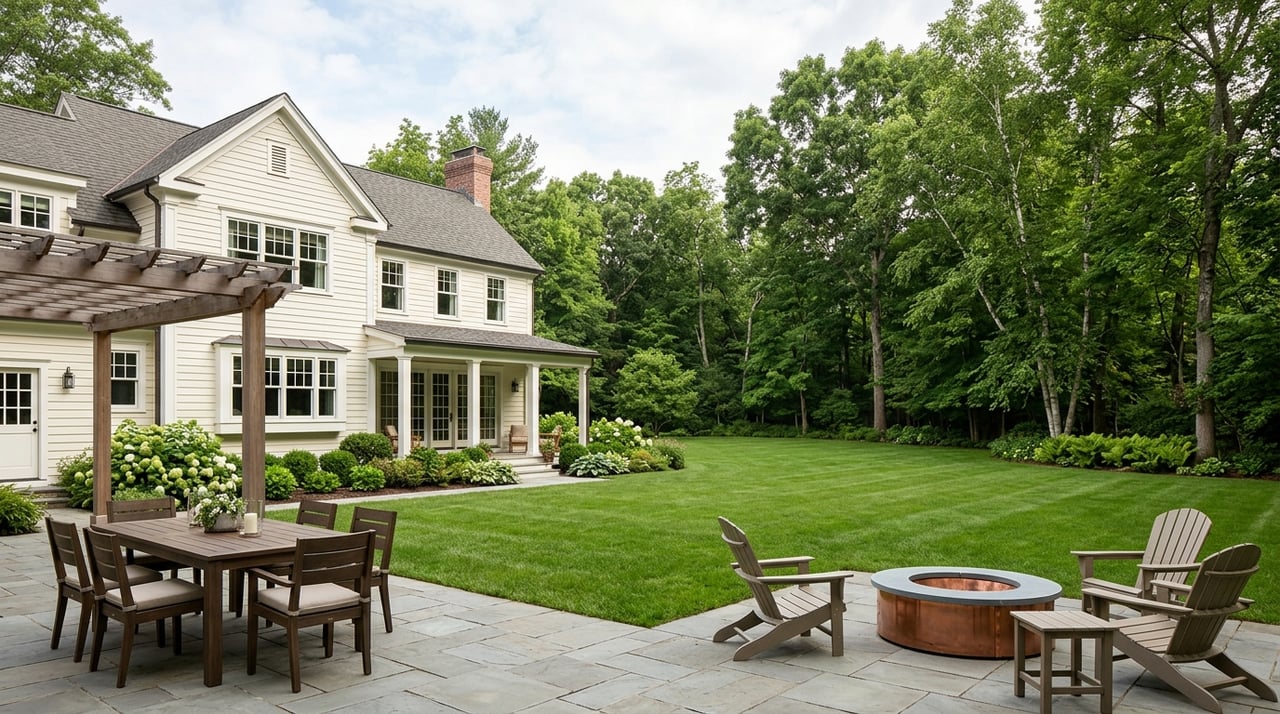
If you are dreaming about more space, more privacy, and room to spread out, Kildeer is one of the few northwest suburban communities where that move can still make real sense. Upsizing to an acreage home is exciting, but it also comes with different rules, upkeep, and long-term planning than a typical suburban lot. This guide will help you understand what changes, what questions to ask, and how to make a smart move in Kildeer. Let’s dive in.
Kildeer is known for spacious lots and a natural setting. According to the village, it spans 2,625 acres, includes about 1,200 residences, and is nearing a population of 4,000. The village’s 2025 comprehensive plan also notes that Kildeer is almost fully built out and remains focused on preserving low-density residential neighborhoods and green space.
That matters if you want a home that feels more private and less crowded. In a market where large-lot inventory can be limited, Kildeer stands out because its development pattern has long centered on one-acre and larger residential living. For many buyers, that combination of space and established character is a big part of the appeal.
Kildeer is also practical for many commuters. Village materials place it about 29 miles northwest of the Chicago Loop and 22 miles northwest of O’Hare. If you want more land without feeling disconnected from the broader northwest suburbs, that balance can be attractive.
More land usually means more responsibility. Kildeer’s planning documents emphasize woods, wetlands, watercourses, open space, and privacy, and the zoning code makes owners responsible for maintaining required yards and open spaces. In day-to-day terms, that often means more mowing, tree care, drainage awareness, and exterior upkeep than you may be used to on a smaller lot.
That does not mean every property will feel the same. Kildeer includes traditional estate-home subdivisions, but it also has maintenance-free villas and cluster-style planned developments. Two homes may offer similar lot sizes on paper, yet the actual maintenance demands and association expectations can be very different.
This is one of the biggest mindset shifts in an acreage move. You are not just buying more house. You are also buying a larger outdoor footprint, a different maintenance rhythm, and sometimes a very different ownership model.
If you are shopping for a true acreage property, local zoning matters. In Kildeer’s R-1 district, every single-family dwelling must sit on at least one acre, with a minimum lot width of 150 feet and minimum depth of 175 feet. The district also requires a 75-foot front yard setback, 35-foot side yards on each side, and a 50-foot rear yard setback.
Those standards shape more than the placement of the house. They can also affect whether future additions, outdoor structures, or expansion plans are realistic. Kildeer also limits lot coverage to 35% and caps floor area ratio at 0.30, which can become important if you hope to significantly enlarge a home or add detached improvements later.
The code also sets minimum house-size requirements. Single-family homes in this district must have at least 2,500 square feet of habitable floor area, and homes with more than one story must include at least 1,500 square feet on the ground floor. If you are comparing older homes, custom builds, or renovation opportunities, those rules are worth reviewing early.
An acreage purchase often comes with a vision. You may want a larger patio, a pool, expanded garage space, or another exterior improvement down the road. In Kildeer, those ideas need to be tested against lot dimensions, setbacks, coverage rules, and local permitting requirements.
The village’s building department states that renovations, improvements, and maintenance may require a permit. Inspections must be scheduled, and contractors must register with the village. Before you assume a property can support your wish list, it is smart to confirm what approvals would be needed.
This is especially important in a village that is nearly built out. When land is limited and neighborhood patterns are already established, local standards tend to matter a great deal. A home can be an excellent fit today, but you still want to know whether it supports your long-term goals.
Some Kildeer properties may rely on private well or septic systems, and that adds another layer of evaluation. Kildeer prohibits private septic systems on lots smaller than one acre in the R-1 district, and Lake County Health Department offers well and septic evaluations that are often requested during sales or refinances. Those evaluations are useful, but they are not a guarantee that a system will continue working in the future.
Illinois EPA says private well owners are responsible for regular testing. It recommends annual bacteria and nitrate testing, along with annual septic inspections and pumping every two to three years. The state also notes that a well should be no closer than 50 feet to a septic tank and 75 feet to a septic field or manure pile.
Lake County’s Water Wells program also inspects and monitors private, semi-private, and supplemental irrigation wells. If a home you are considering uses private systems, this is not a detail to gloss over. It should be part of your early due diligence, not a last-minute surprise.
It is easy to assume that acreage automatically gives you broad flexibility, but that is not always the case. For example, buyers who are thinking about horses should know that Kildeer is much more restrictive than a rural township. The code allows equine animals only on lots of 435,600 square feet or larger, along with additional setback rules for animals and accessory structures.
That is a good reminder that “large lot” and “rural use” are not the same thing. Kildeer’s identity is suburban, low-density, and preservation-minded. If you have a very specific use in mind, local code should be part of your home search strategy from the beginning.
Kildeer is not a one-size-fits-all market. Village materials show that school assignments vary by subdivision, with Districts 95, 96, and 125 represented in different neighborhoods. If district alignment matters to your move, it is worth confirming that information for any home you are seriously considering.
Subdivision style matters too. The village’s neighborhood information shows a mix of estate-home communities, maintenance-oriented options, and clustered developments. That can be helpful because it gives buyers more than one path into the Kildeer market, but it also means you should compare properties based on more than lot size alone.
A larger lot may offer privacy, while a cluster-style development may reduce exterior upkeep. Neither is automatically better. The right choice depends on how you want to live and how much hands-on maintenance you want to manage.
Kildeer’s comprehensive plan offers a helpful window into why acreage homes here often hold lasting appeal. The village emphasizes privacy, sunlight, open space, neighborhood orientation, and the preservation of environmentally sensitive lands. It also aims to discourage non-local traffic through residential areas.
For buyers, that planning approach can support a quieter, more private residential feel. Since Kildeer is almost fully built out, the supply of true large-lot properties is naturally limited. That combination can be appealing for future resale, especially when a property is well maintained and positioned correctly for the market.
Still, resale is rarely about lot size alone. Buyers will often compare maintenance model, utility setup, subdivision type, and school district alongside the home itself. The strongest resale strategy usually starts with choosing a property that fits both your current lifestyle and the next buyer’s likely priorities.
If you are upsizing to an acreage home in Kildeer, a few practical questions can save you time and stress.
These are not small details. They are the kind of issues that shape whether a move-up home feels easy and enjoyable or unexpectedly demanding.
The best acreage purchase is usually the one that fits your life on both paper and in practice. You want enough land to enjoy, but not so much upkeep that the property becomes a burden. You also want a home that aligns with local rules, future improvement goals, and the day-to-day lifestyle you actually want.
That is where local guidance becomes especially valuable. In a market like Kildeer, details such as subdivision structure, private utilities, and zoning standards can make a major difference in how a property functions over time. A thoughtful buying strategy helps you look beyond square footage and focus on the full ownership picture.
If you are considering a move to a larger property in Kildeer, working with someone who understands the nuances of northwest suburban inventory can help you weigh tradeoffs clearly and move forward with confidence. When you are ready to talk through your options, connect with Valorie Schmidt for a personalized consultation.


Whether you are just down the street or considering a move from another state, Valorie Schmidt is here to guide you through the exciting journey of real estate. Your dream home or a successful sale is just a conversation away.

OFFICE ADDRESS 508 S NORTHWEST HWY BARRINGTON IL 60010