
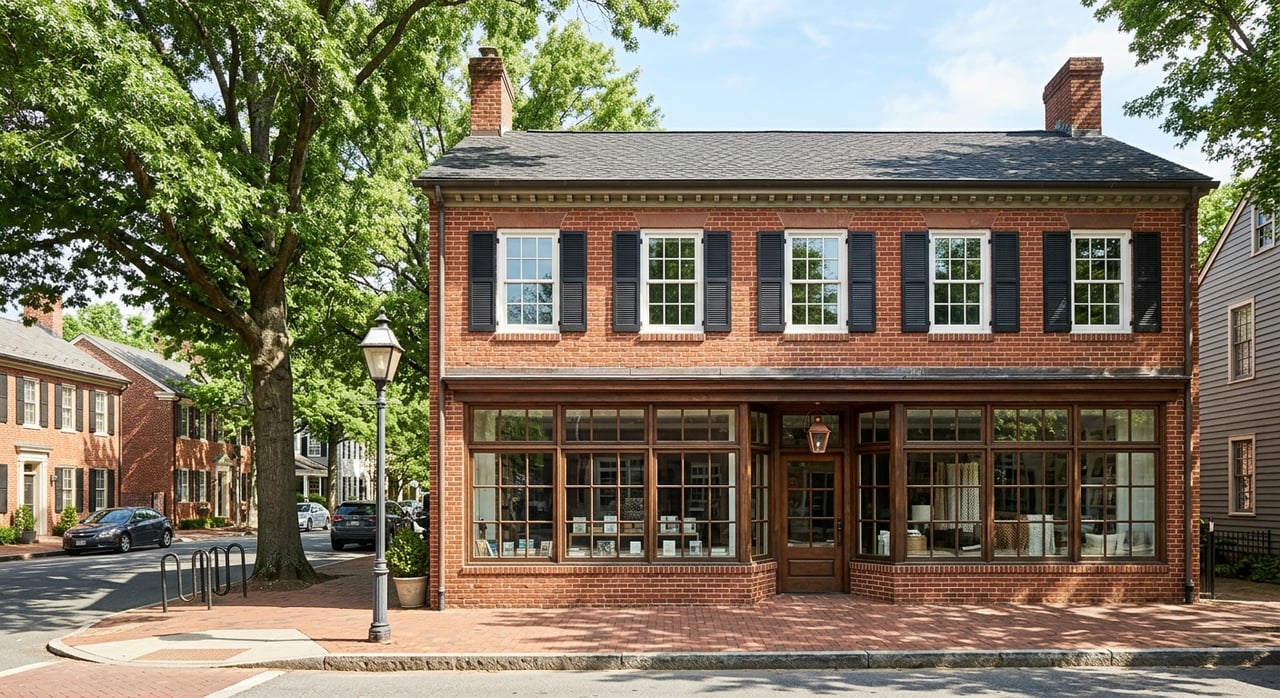
Looking for a small commercial or mixed-use property in Barrington? This market may be compact, but it offers a lot for buyers who want visibility, walkability, and long-term potential. If you are a small business owner, investor, or owner-user trying to make a smart move, understanding where opportunity sits and what to review before you commit can save you time and money. Let’s dive in.
Barrington benefits from a unique mix of local spending power, transit access, and a defined village core. The Village of Barrington describes itself as the hub of a 90-square-mile area spanning seven independent villages and more than 47,000 residents. At the village level, the U.S. Census Bureau estimated Barrington’s population at 10,615 in July 2024.
The consumer profile also matters. In 2020 through 2024 ACS data, Barrington had a median household income of $147,989, an owner-occupied housing rate of 78.4%, and a bachelor’s degree attainment rate of 68.0% among adults. The same Census data shows 2022 retail sales of $1.08 billion, or $102,740 in retail sales per capita.
For you as a buyer, that points to a market that may be better positioned for neighborhood-serving businesses, professional offices, and experience-focused retail. It also helps explain why well-located mixed-use space in Barrington can attract serious attention. Demand here is not just about traffic counts. It is also about customer quality, convenience, and fit.
Barrington’s 2021 Comprehensive Plan makes Village Center revitalization a major priority. The plan describes Village Center as a mixed-use area with retail, service, office, artisan, institutional, and residential uses. It sits around the Metra Union Pacific Northwest station and key corridors like Main Street, Lake-Cook Road, and Hough Street.
That matters because the village is not treating mixed-use growth as an accident. It is part of the planning framework. If you are searching for a small commercial building, a storefront with upper-level space, or an owner-user opportunity, this policy direction can help you narrow your focus.
The plan divides Village Center into 11 walkable subareas, including:
These are the areas where the village specifically encourages mixed-use, retail, office, artisan, and low- to medium-density residential redevelopment. In practical terms, that gives you a clearer map of where smaller-scale commercial and mixed-use deals may align with the village’s long-term goals.
If you are evaluating commercial property in Barrington, zoning is one of the first filters to apply. Barrington’s zoning ordinance includes several business-related districts, including B-1, B-3, B-4, B-5, and B-R Mixed Business-Residential.
The B-R district is especially important for mixed-use buyers. The comprehensive plan encourages the restoration and reuse of B-R buildings for office, retail, and residential uses. It also considers rezoning some West Main Street properties to B-R or B-1 for mixed uses and identifies places like the northeast corner of Cook, Main, and Chestnut streets and the West Liberty Street area as mixed-use redevelopment opportunities.
For you, that means some of the most interesting opportunities may not be standalone retail buildings. They may be flexible properties where a storefront, office, or service use can work alongside residential space. Those setups can offer multiple income streams, but they also require more careful review of use permissions, building layout, and operating costs.
A current example of Barrington’s redevelopment direction is the Golden Triangle. In May 2025, the village approved a redevelopment agreement for 200 to 300 N. Hough Street. According to the village’s TIF information, the district includes the project site and is intended to help offset acquisition, consolidation, and environmental cleanup costs.
The approved redevelopment includes 125 luxury apartment units, about 12,000 square feet of street-level restaurant and retail space, and 37 car condominiums. For buyers and investors, this is a meaningful signal. It shows continued support for higher-intensity mixed-use development in a key area of Barrington.
You may not be purchasing a project of that scale, but the lesson still applies. Public planning priorities often shape where private opportunity gains momentum. Smaller buildings near active redevelopment areas can benefit from the same broader pattern of reinvestment.
Based on Barrington’s planning framework and local market profile, several types of small commercial and mixed-use opportunities may stand out:
The best fit depends on your goals. If you want stable occupancy and simpler management, a smaller office or neighborhood retail asset may be appealing. If you want flexibility and possible upside, a mixed-use building may offer more paths to add value over time.
When you review a Barrington commercial or mixed-use deal, do not stop at the asking price or advertised income. The lease structure can change the economics significantly.
In general terms, a triple net lease means the tenant pays base rent plus taxes, insurance, and operating expenses. A gross lease usually means the landlord absorbs operating costs within a fixed rent structure. A modified gross lease is a hybrid, often used in multi-tenant properties, where some expenses are shared or passed through based on negotiated terms.
For mixed-use properties in Barrington, that distinction is especially important. A building with retail on the first floor and office or residential space above may have common areas, shared systems, and negotiated cost allocations. That can create opportunity, but it can also create confusion if the numbers are not clearly defined.
Before you move forward, review the details closely:
The marketing summary does not control risk. The lease language does.
Barrington has several local requirements that can affect timing, cost, and feasibility. Before a business occupies a property, the village requires users to confirm the proposed use is permitted at that location and complete a Business Registration or Zoning Certificate application.
The village also notes that some unincorporated parcels may still carry a Barrington mailing address. That means you should confirm actual village jurisdiction rather than assume the address tells the full story. This is a small step, but it can prevent major surprises.
For commercial tenant improvements, code compliance can also influence your budget. The village states that improvements may trigger upgrades such as ADA work or fire-suppression and alarm requirements. Commercial-property work requires an Illinois-registered architect or structural engineer, and while standard permits are typically reviewed in 8 to 10 business days, larger remodels, additions, and commercial projects often take longer.
Barrington also uses the 2018 International Code Council code set with local amendments. If you are underwriting a renovation, that detail should be part of your planning from day one.
Some Village Center properties may fall within the Historic Overlay District. If they do, exterior changes require Architectural Review Commission approval and a Certificate of Appropriateness in addition to a building permit.
According to the village, the ARC process generally takes 60 to 90 days. The design standards can affect façades, additions, roofs, windows, and signage. For a buyer, that does not mean the property is off the table. It means your timeline, design plan, and improvement budget need to reflect the approval process.
This is especially relevant if you are buying for repositioning. A building that looks like a value-add opportunity on paper may require more patience and planning if exterior changes are part of the strategy.
In small commercial and mixed-use deals, seemingly minor practical issues often have a big impact. In Barrington’s core, signage and parking are two of the most important.
Barrington’s sign code is more restrictive in B-4, B-5, and B-R districts. The Village Center plan also discusses shared parking concepts, possible parking structures in South Cook Street, and continued attention to parking restrictions on Main Street during peak hours.
If you are buying for your own business or evaluating tenant demand, these details can shape daily usability. A good location still needs workable access, visibility, and a realistic parking solution. That is why local due diligence should go beyond the building itself.
Not every permitted-looking property is ready for every business use. Barrington notes that food establishments need county health inspection and licensing. Liquor sales require a liquor license, and some uses, including tobacco and massage, may require special use approval. Outdoor cafés also need a license.
The village also conducts annual fire inspections for commercial buildings, checking exits, emergency lighting, alarms, sprinklers, and egress conditions. For you, the takeaway is simple: property fit is about more than square footage and price. It is about whether your intended use can operate smoothly under local rules.
If you are considering a small commercial or mixed-use purchase in Barrington, focus on a few core questions first:
A strong opportunity is often the one with the fewest hidden frictions. In Barrington, that usually means the property aligns with village planning goals, supports the intended use, and has a clear path for occupancy or repositioning.
Barrington is a market where local knowledge matters. Two properties can sit close to each other and still present very different zoning, approval, parking, signage, or redevelopment considerations.
That is why buyers often benefit from a team approach that includes a broker, lender, attorney, and architect. With the right guidance, you can compare opportunities more accurately, underwrite them more realistically, and avoid wasting time on properties that look better online than they do in practice.
If you are weighing a storefront, owner-user building, or mixed-use investment in Barrington, a thoughtful local strategy can help you move with more clarity and confidence. When you are ready to talk through your options, connect with Valorie Schmidt for a consultation tailored to your goals.
Whether you are just down the street or considering a move from another state, Valorie Schmidt is here to guide you through the exciting journey of real estate. Your dream home or a successful sale is just a conversation away.
OFFICE ADDRESS 508 S NORTHWEST HWY BARRINGTON IL 60010