
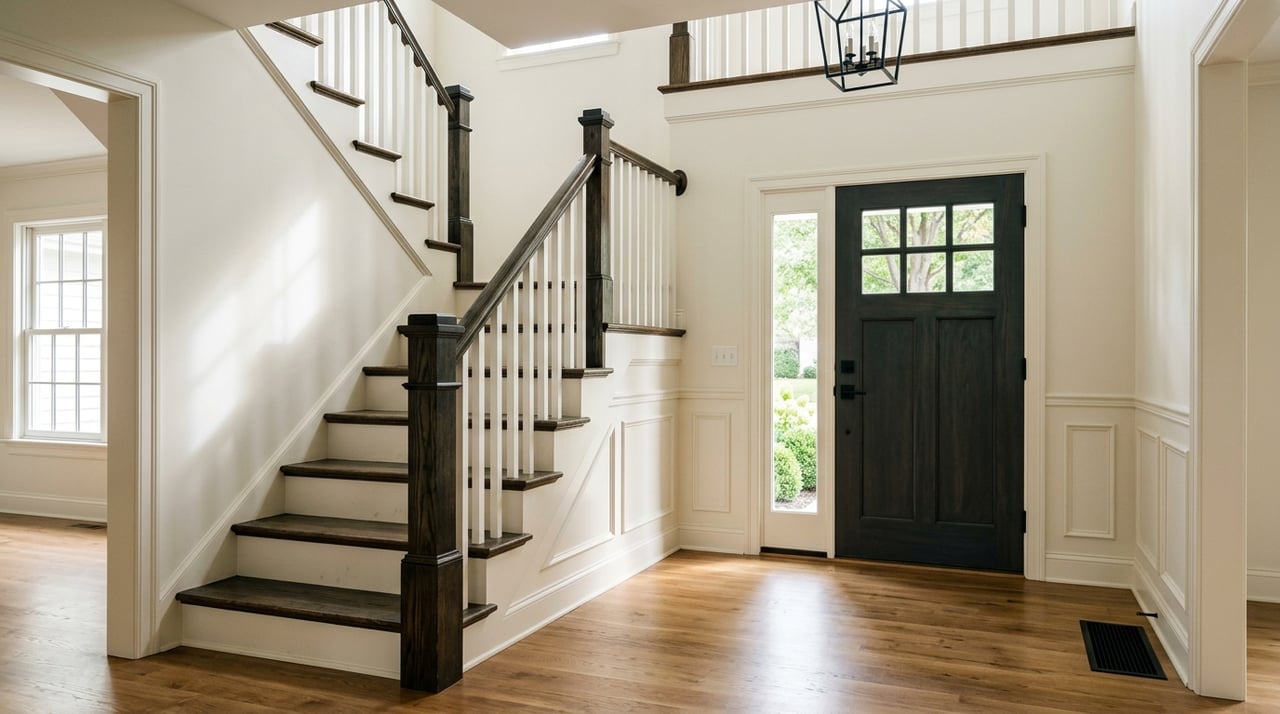
If you price your Palatine home too high, you may miss the most important window of buyer attention. If you price it too low without a clear plan, you may leave money on the table. In today’s Palatine market, the right strategy is not about guessing. It is about reading the local data, understanding your competition, and matching your price to how buyers are behaving right now. Let’s dive in.
Palatine is still a competitive market, but that does not mean every home can push past the market and expect strong results. Redfin reports a median sale price of $385,000 over the last three months, up 9.3% year over year, with homes getting about four offers on average and selling in around 43 days.
At the same time, Zillow shows a typical home value of $396,075, 191 homes for sale, and a median time to pending of 8 days. Realtor.com reports a median listing price of $420,000, 234 active homes for sale, and a median 23 days on market. These numbers point to the same conclusion: buyers are active, but they still have options.
That is exactly why pricing matters so much. A strong launch price can help your home stand out early, while an inflated price can push your listing into a more crowded group of competing homes.
If you want the most reliable pricing anchor, start with recent closed sales in your part of Palatine. Sold comps show what buyers were actually willing to pay, which is more useful than looking only at what sellers hope to get.
This matters because online pricing snapshots are not all measuring the same thing. Zillow’s number is a home value index, while Realtor.com’s local data reflects MLS-listed homes for sale. Those are both helpful, but neither should replace recent comparable sales for homes with a similar size, style, location, and level of updates.
In a market like Palatine, where sold-price signals cluster around the mid-to-high $300,000s while listing prices sit in the low $400,000s, pricing from active listings alone can be risky. Your best strategy is to ground your list price in recent sales, then adjust for your home’s condition and current competition.
Buyers do not compare your home to last spring’s market. They compare it to what they can tour this week. With roughly 191 to 234 active homes for sale across major portals, your home will enter a field where presentation and pricing work together.
If your list price reaches too far beyond the current market band, buyers may skip over it for newer, better-updated, or better-positioned listings. Even in an active market, overpricing can reduce urgency and limit showing activity in the first days on the market.
A smart pricing strategy looks at both sold data and active inventory. That balance helps you position your home where it can attract serious buyers instead of sitting while others set the pace.
One of the biggest questions sellers ask is whether Palatine is moving fast enough to support a strong list price. The answer is yes, but only when the price matches the market.
Zillow shows a median time to pending of 8 days. Realtor.com reports a median 23 days on market, while Redfin shows 43 days to sell and about four offers on average. Cook County’s June 2026 update also showed that 51.3% of homes sold above list price.
That combination tells you something important. Buyers are still responding quickly to well-priced homes, and strong early demand is possible. But speed is not automatic. Homes that miss the market on price can lose momentum fast.
Palatine is not one flat pricing zone. Values can vary significantly depending on the area, and that is why broad town averages should never be your only guide.
Zillow’s neighborhood data shows values ranging from about $333,846 in Cobblers Crossing to $677,208 in Scarsdale. Realtor.com also shows notable neighborhood differences, including Baldwin at $547,000 and Winston Park Northwest at $424,500.
ZIP code differences are meaningful too. Realtor.com reports a median listing price of $512,450 in 60067 compared with $358,450 in 60074. That gap of about $154,000 is a clear reminder that buyers do not price homes by town name alone.
Micro-location is not just about the neighborhood name. It also includes the features that affect day-to-day convenience and buyer appeal.
The Village of Palatine’s 2025 Comprehensive Plan identifies the Metra station at 137 West Wood Street as the Village’s primary transit hub and a key driver of downtown activity. That supports what many sellers already sense: access to downtown Palatine, Metra convenience, parking, and walkability can all shape buyer demand.
When you price your home, those location details matter. A home with easier access to commuter options or downtown amenities may compete in a different band than a similar home farther away.
Condition still plays a major role, even in a market that can move quickly. Buyers are comparing photos, finishes, maintenance, and overall presentation before they ever schedule a showing.
Realtor.com’s seller guidance notes that pricing should reflect current comparable sales, market conditions, and property condition. It also points out that minor cosmetic improvements like fresh paint, updated fixtures, and improved landscaping can help attract more buyers and potentially stronger offers.
That does not mean every seller needs a major remodel. It means your price should reflect how your home shows today. If your home is move-in ready and well presented, you may be able to compete more confidently. If it needs updates, buyers will usually factor that into what they are willing to pay.
Today’s pricing strategy also has to account for the cost of borrowing. Freddie Mac reported that the 30-year fixed mortgage rate averaged 6.55% on July 16, 2026.
That rate backdrop helps explain why buyers can be more selective than they were during the ultra-low-rate period. Even motivated buyers may have tighter monthly payment limits, which makes precise pricing more important.
In practical terms, this means a home priced just beyond a buyer’s comfort zone can lose traffic quickly. A home priced in line with the market is more likely to draw attention early and create stronger leverage.
You may also hear optimistic projections about where prices are headed. Illinois REALTORS’ April 2026 forecast projected Chicago-area sales prices to rise nearly 5% in 2026, with statewide prices expected to rise about 3.4% and inventory growing modestly.
That is helpful context, but it should not be treated as a promise for your specific home. Forecasts describe broad trends, not guaranteed outcomes for one property in one part of Palatine.
The better approach is to use forecasts as background and let current comps, active competition, and your home’s condition guide your actual list price. That keeps your strategy grounded in what buyers are doing now.
If you are getting ready to list, your pricing plan should be simple, local, and data-driven. The goal is to launch in a range that creates attention rather than resistance.
Here is a practical framework:
This kind of strategy gives your listing the best chance to capture attention while buyers are most engaged. In a market where buyers are active but price-aware, that early momentum can make a real difference.
Strategic pricing is not about chasing the highest possible number on day one. It is about positioning your home where the market will respond.
Palatine’s numbers show a market that is still competitive, with active buyers, meaningful variation by area, and enough inventory to reward careful pricing. When you combine recent sold comps, current competition, and a realistic view of condition, you give your home the strongest chance to earn early attention and more competitive offers.
If you are thinking about selling in Palatine and want a pricing strategy tailored to your home, neighborhood, and goals, connect with Valorie Schmidt for a personalized consultation.
Whether you are just down the street or considering a move from another state, Valorie Schmidt is here to guide you through the exciting journey of real estate. Your dream home or a successful sale is just a conversation away.
OFFICE ADDRESS 508 S NORTHWEST HWY BARRINGTON IL 60010